Denver Airport Limousine

Selecting transportation to and from the Denverairport should be an easy choice. You want a Denver airport limousine as the best way to get to and from the airport. TheDenver area is huge and theDenverInternationalAirport is crazy to try and navigate. So to have your very own personal chauffeur is an amazing feeling. Besides, it is very confusing to get out of the airport, especially if it is your first time there.  So select someone who is experienced in getting in and out of the airport quickly.

 The airport in Denveris not very far from the city at all but when there is traffic in downtown Denver, it is as close to a nightmare as you can possibly experience. Even the locals who have lived there for 15 or 20 years still complain about Denvertraffic. So riding in a Denver limo is a smart decision. The professionals who drive these limos know shortcuts and side streets to get in and out of the Denver Metro area quickly.

 When you are riding to or from the airport courtesy of your Denver airport service, consider the history of the limo and how far it has come since its inception. The very first limo was crafted in 1902. It was made so that the driver of the limo sat outside in a covered compartment. The first limo known as a stretch limo was designed in 1928 by Armbruster, a coach company. These were sometimes called band buses because at first they were used to transport big band entertainers such as Glenn Miller.

A1AutoTransport: Know Your Options

Are you familiar with services provided by businesses such as A1AutoTransport? Suppose you frequent the ads on websites like ebay and craigslist, drooling over cars you would own if only the seller was someplace that you could drive to. If you were familiar with A1AutoTransport, then you would no longer be drooling on your keyboard but rather on the dashboard of your sporty new whip that was delivered to your home this afternoon. A little knowledge never hurt anybody. Knowing the kinds of auto transport services that are out there, their limitations and their limitations, only expands the possibilities for your future. Long distance moves will be less stressful if you are trying to transport your car. Business will be smoother with a steady transport service that delivers cars to your warehouse or dealership. Every day, your vehicle transports you places, but do you ever stop to think who transports your vehicle places?

                These kinds of services are not just limited to car transport either. If you are the proud owner of an RV, a boat, or a motorcycle, then transport services both domestically and internationally, are available. A quick phone call or a direction of your web browser is all that it takes to receive a quote for your next transport. Shipping is safe and secure. You can even watch your delivery, in real-time, via satellite. You can be with your delivery every step of the way. Imagine the peace of mind you will have by knowing when car is still on in route, on its way to the destination.

Choosing an Auto Transport Service

Choosing a service to transport your vehicle is a decision that should be made carefully, so every attempt should be made to gather as much information as possible about the details of the services offered, the estimated time involved, and of course, about the price. You want the company you choose to provide A1AutoTransport, and many will promise as much, but finding the most reliable company is up to you.

Your responsibilities include providing your prospective company with enough information about your requirements to be able plan for the job and to give you a good quote on what transporting your vehicle would cost. There are many auto transport  companies that are equipped to handle all sorts of jobs provided that they are given all of the requisite information before beginning the job.

So when selecting a company, you should give some thought to what your requirements are. Are you looking to ship a high end vehicle, a collector’s car that will never be driven, or your trusty day to day vehicle? Is your priority price, or security? These and other similar questions are important to consider, because there are companies that specialize in the transportation of high end vehicles, using special enclosed trailers and offering  extra protection for their customer’s vehicles. Needless to say, such companies charge premium prices. If you are looking for a reputable, reliable company to transport your family car at minimal cost, you can find that as well.

Top Five Muscle Cars of all Times

Muscle cars have always been the crowning glory of the American auto industry in the 1960s and 70s. Even though there been a decline in popularity over the years, one thing is for certain among car buffs: a sense of enthusiasm and nostalgia grips them when classic muscle cars are brought up in conversation.

So, here’s a list that might bring a smile on your face, as we look at the big and noisy “muscle cars” that have been popular during the latter half of the 21st century:

#5: 1970 Plymouth Hemi ‘Cuda

With five high-powered V8 engines, the Hemi Barracuda put out at least 425 horsepower, making it a car to reckon with, despite having to deal with questionable handling.

#4: 1970 Chevelle 454 SS

The defining feature of this vehicle is its 454 cubic inch engine at a horsepower of 360; a LS6 upgrade would catapult it to a horsepower 450, really pushing the limits to engine power.

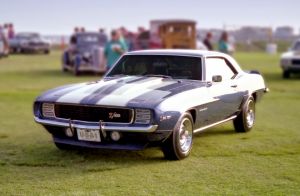
#3: 1969 Z28 Chevy Camaro

This vehicle is popular amongst muscle car enthusiasts, and is considered to be the first generation Camaro designed for Trans-Am racing.

#2: 1966 Shelby Cobra 427

The Shelby Cobra was not actually an American car but actually based on a British AC Ace Roadster with a huge Ford 427 engine under its hood.

#1: 1967 Shelby Mustang GT500

Created by Carroll Shelby, this vehicle possessed a Police Interceptor Engine with horsepower amounting to 355, this car shot to instant fame, and remains so, because of its design suiting road use as opposed to the GT350 which was for the races.

A History of ‘Muscle Cars’

If one has to define ‘muscle cars’, the most common one would be mid-size American cars that are rear wheel drive and are powered by V8 engines. In other words, it’s very simply a small car that has a big engine in it.

However, one thing is for sure, they were definitely designed for straight line speed alright with anything but the engineering integrity of the-then high-performance European cars. Even till this day, both enthusiasts and experts are divided as to whether pony cars, compacts or even high performance full-sized cars belong to this category.

Yet history is very clear about the 1949 Oldsmobile Rocket 88 being the first of its very kind, with the Hudson Hornet being the only mid-sized car that could give it a run for its money when it came to its performance potential.

In the 1950s, Chrysler held the title of “America’s Most Powerful Car” with its 1955 C-300, and which was capable of accelerating from zero to sixty miles per hour in 9.8 seconds. With horsepower touching almost 300, it became the new star of NASCAR until the Rambler Rebel took its place.

The 1960s saw a surge in muscle car models and with the 1970s seeing cars offering at least horsepower of almost 450 and above. But with this came the decline as the automotive safety lobby made sure that most of these ‘muscle cars’ were out of reach, thanks to the expenses involved in owning one of these “beauties”.

Of course, with the Dodge Challenger, Chevrolet Camaro and Ford Mustang leading the way these days, the power that was the hallmark of muscle cars have now been combined with safety, fuel economy, handling and reliability that was not present in older versions.

Reasons For The Decline Of The ‘Muscle Car’ Era

If there’s anything that you understood a muscle car by, it was its performance in terms of speed and power that set it apart from the traditional vehicles that were used. The common denominator between these muscle cars was the powerful V8 engines that it used.

If that wasn’t enough, most of these cars also possessed unique features that contributed to their acceleration capability, and with the lightweight body, were the perfect cars for racing.

However, the golden age of muscle cars quickly faced a sharp decline after the 1960s and 70s for several reasons. Probable the most obvious of them all was whether it was a good idea to produce such powerful vehicles for the general public, thanks to the number of incidents that showed irresponsibility on the part of these muscle car drivers.

Insurance rates hit the roof in insuring these cars, thanks to the aforementioned irresponsible driving, and which was the reason why insurance companies found these vehicles (and their drivers) to be such a liability. These high insurance rates made it very difficult for enthusiasts to be able to own one of these vehicles especially if they weren’t that well off.

Another important reason for the decline of the ‘muscle car’ era was due to the efforts of lawmakers to control pollution standards. Unfortunately, the cars and their manufacturers could not meet with such high emission control standards and with the high insurance rates, these two factors led to the decline of the ‘muscle car’ era altogether.

Of course, you can find auto manufacturers attempting to bring this era back but most of their models give enthusiasts enough and more reasons to reminisce about the classic cars of the 60s and 70s.


60s/70s Classic Muscle Cars – A List

In this day and age, the resurgence of the ‘muscle car era’ is considered to be unlikely by several enthusiasts. To put it simply, car manufacturers will never go back to producing vehicle with the focus purely being on performance, power and speed.
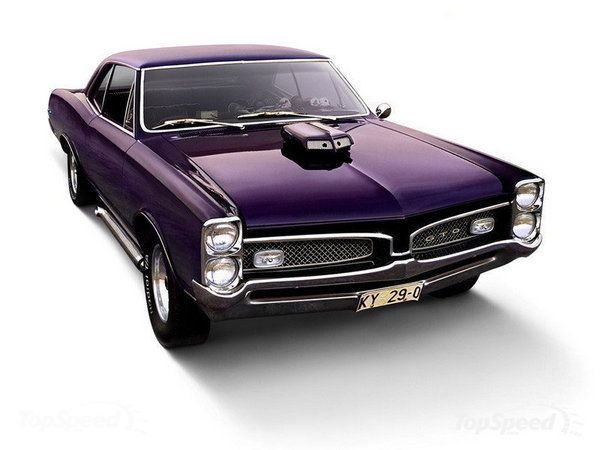
This is probably the reason why classic muscle cars from the 60s and 70s will continue to be revered for a long time.

So, here a list of late 60s and early 70s muscle cars:

#1: Dodge Charger

Launched in 1966, this vehicle with the Hemi engine put out almost 500 bhp and reached 100 km/h in just 5 seconds.

#2: Oldsmobile 442

Equipped with a police specification engine with the ability to crank out 310 bhp, this Cutlass model has been considered to be one of the best cars for handling amongst other muscle cars of its era.

#3: The 1966 Ford Fairlane GT

At its very best, the Ford Fairlane GT used a NASCAR 7.0 liter engine that was at 435 bhp, and could get your to 100 kmph in about six seconds or so. Rigid front suspension and disc brakes improved handling to a large extent.

#4: Dodge Challenger

Selling more than 80000 cars in its first year, its most popular model R/T garnered a lot of attention amongst enthusiasts, can be seen in the movie ‘Vanishing Point’.

#5: The 1970 Buick GSX

Perhaps the defining feature of this vehicle was its ability to accommodate a 7.5 liter engine and produce 400 bhp, and came only in yellow or white, as opposed to the Buick GS.

#6: The 1969 Pontiac GTO

This vehicle was targeted towards a younger audience, and in its final version, was fitted with a 6.5 liter V8 engine that could put out almost 366 bhp, making for a cheap and fast car.
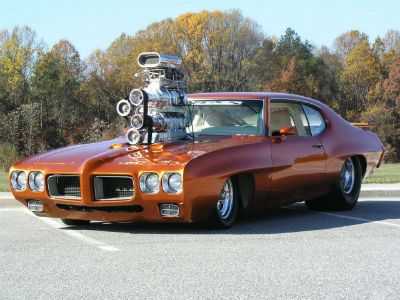
 

Questions to Ask If Restoring a ‘Muscle Car’

Owning a “muscle car”, a trend which has been steadily on the decline since the 60s & 70s, is a dream that most people have. If you’re one of these folks who have always loved old cars and wish to buy one, here are a few questions that you should ask yourself:

#1: What’s the budget?

Knowing how much money you can spend is the first step to owning a muscle car. As you search for your favorite car both online and offline, this figure will change, but it is good to at least have a starting point.

#2: What condition should the car be in?

If the car that you have your eye on is in a semi-restored or unrestored state, it might cost you much less. However, once you do buy and decide to put it back on the road again, you will soon realize that the working parts required can cost you a fortune.

#3: Which model/ car do I want?

Since most of these classic muscle cars are pretty expensive, there’s no doubt that you budget will dictate which vehicle you would like to purchase. However, if you do have the money and have a sentimental attachment to a particular automaker, it’s probably a good idea to go after what you want.

#4: Can I ‘restore’ the car myself?

Since these powerful cars were designed rather simply, all it takes is a simple garage and some tools to bring it back to mint condition. If you don’t have the appropriate knowledge to carry out such a project, please be advised that it could be very expensive to hire a professional for the job.